Harmonized Chaos
A living, non-dogmatic teaching

Stability is an illusion.
Only the surf is real.

Harmonized Chaos is not a religion you sign. It is a way of seeing the world where order and disorder are partners, every life is a thread in one shared web, and showing up honestly counts more than getting it right.

One web, many faces Six tenets Seven values No final map
scroll
Where this came from Not channeled

This is not handed down from anywhere.

Some belief systems get presented like they fell out of the sky and landed in a book. This one didnt. Harmonized Chaos is what one tired person started writing down after spending years inside a system that hurt them and a few more years trying to figure out what was actually true once that system was gone.

I am not a guru. I am not a priest. I work in tech. I read too much. I have a family. I have years of religious wounding I am still untangling. I have a deep stubborn sense that the universe is bigger and stranger and kinder than the version I was handed, and I got tired of waiting for someone to write the framework I needed.

So I started writing it.

The pieces here are stitched together from a lot of places. Some old, like Taoism and Kabbalah. Some newer, like complexity science and process philosophy. Some came from sitting with my own life long enough that the patterns started showing up. None of it is original in the lonely-genius sense. All of it has been useful to me.

I am putting it on the internet because if I needed this fifteen years ago and could not find it, somebody else probably needs it now. That is the whole reason this site exists. Not to convert anyone. Not to start a movement. Just to leave the map I wish I had found.

If any of it lands for you, take it. If none of it lands, that is also fine. The web is wide. There are many rooms.

Filed under a draft, like everything else
Where this starts

Ok so here is the deal.

A lot of us got handed a spiritual map that did not match the territory. Maybe it told you the world is a battlefield. Maybe it told you doubt is the enemy. Maybe it told you that order is holy and chaos is sin and your job is to keep your hands clean.

Harmonized Chaos starts somewhere else. It starts by saying, gently, that the map is wrong. Or at least, the map is way too small.

Reality is not a tidy machine waiting to be fixed. It is more like a heart. A healthy heart does not beat like a metronome. A metronome heart is a dying heart. Health is in the variability. Health is in the gentle, organized mess.

That is what this teaching tries to get at. Chaos is not the opposite of the sacred. Chaos is the raw material the sacred works with. Order without chaos is brittle. Chaos without order dissolves. Life happens at the seam.

This site walks through the values, the tenets, and the daily practice. It honors other traditions without pretending to replace them. It is not the only true path. It is one shape of the truth that some people have found useful.

Take what serves. Leave what does not. The web is wide.

Symbol
K
Hover the halves
The Sacred Chao

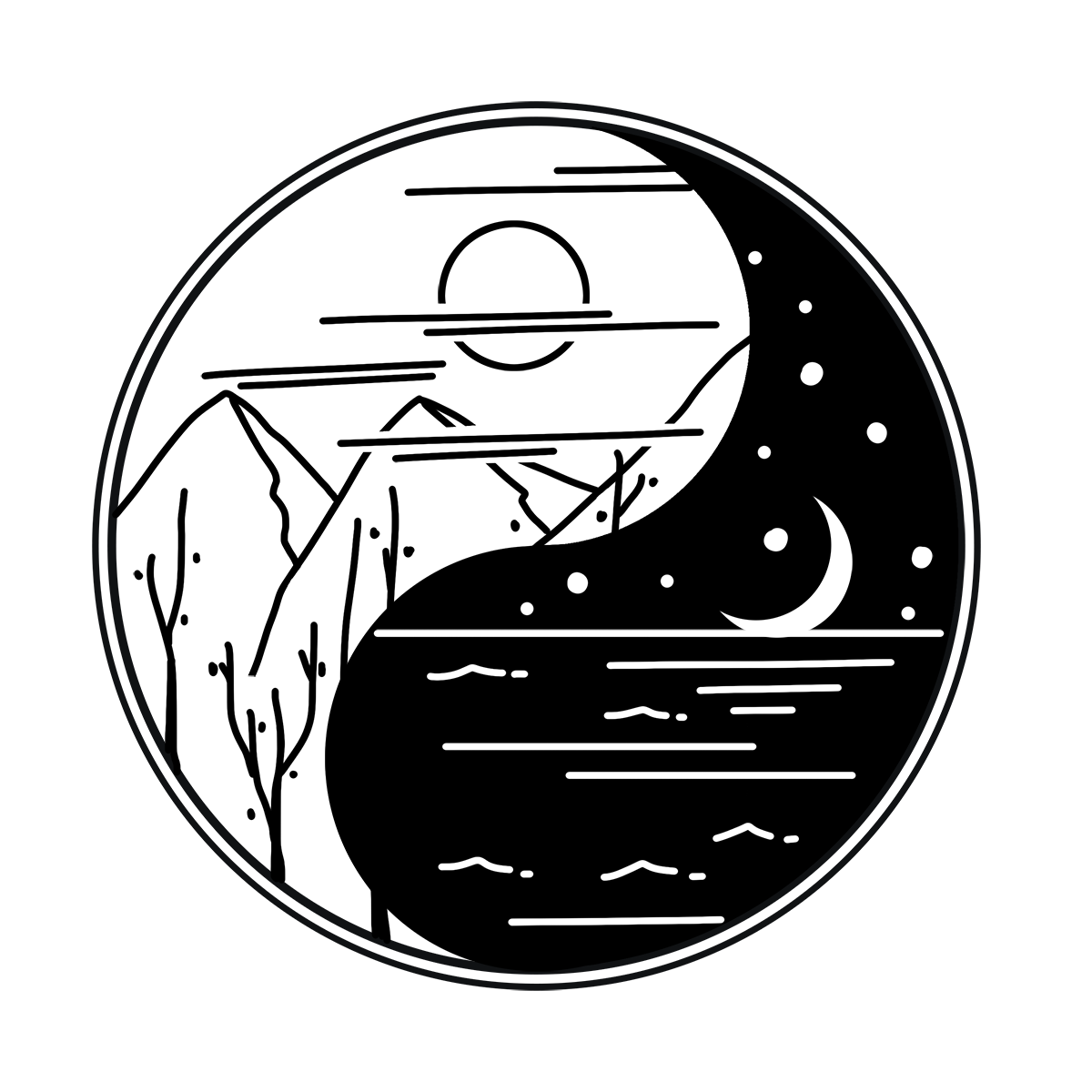
Two halves of the same breathing thing.

The pentagon stands for order. The apple, for chaos. Most maps treat these as enemies. The Sacred Chao treats them as partners that need each other to make anything alive.

There is a healthy kind of order, the kind that lets a song stay in key. There is a sick kind of order, the kind that turns a heart into a metronome and a faith into a fence. There is a creative chaos, the kind that lets new things start. There is a dissolving chaos, the kind that takes everything apart.

The point is not to pick one side. The point is to learn the difference between the healthy and the sick of both.

Before the rules, the values

Seven things we stand on while we explore.

You do not have to agree with every tenet to feel these. They are the ground. Tenets and practices are just ways of feeding these values back into the web.

01

Interconnection

Everything exists inside one shared field of life and mind. What we do to each other, to animals, to the land, and to ourselves never stays fully private.

02

Reverence for Life

Every life is a channel for experience, from the ones we understand easily to the ones we barely grasp. We aim for quality of experience, not just survival or numbers.

03

Sacred Experience

Existence is here to be experienced, not just survived or explained. Ordinary moments and hard seasons both count as real data.

04

Compassionate Community

We do not grow alone. Caring how our actions land on others, with consent, boundaries, and rest, is part of the work.

05

Curiosity & Humility

No one has the full map. Every tradition holds a fragment. We hold our own views sincerely but lightly.

06

Participation & Growth

Perfection is not the goal. Honest participation is. We expect mistakes, mess, and course corrections as part of how the web learns. Show up, try, learn from impact, adjust.

07

Open Future, Shared Responsibility

The future of the web is not locked in. We inherit patterns, but we are not only their victims. We can help end some and start better ones.

The core beliefs

Six tenets, in plain language.

Tap any tenet to read more. The short version sits on the surface. The longer reading and practical implications open underneath.

Tenet 01
One Conscious Web
All beings and all sacred stories arise within one living field of consciousness. We appear separate and follow many paths, but at the level of the web, we belong to the same mind.
+

At the heart of Harmonized Chaos is this claim: there is one conscious web, appearing as many. Every person, animal, spirit, god-image, and moment of awareness is a different expression of the same underlying field of mind.

You, the people you love, the stranger on the street, the forests, oceans, planets, and the presences we call gods or guides are not utterly separate substances. They are distinct patterns in a shared fabric. Like waves on one ocean or lights in one net, they have their own shapes and stories, but they rise from and return to the same depth.

This web is not an abstract idea. You feel traces of it when a song written by a stranger decades ago fits your own heart exactly, when a room shifts as someone enters, or when you sense a connection you cannot fully explain.

In this framework, the divine is not a distant ruler outside the universe. The divine is the emergent wisdom and love of the whole web, the way the shared consciousness learns, remembers, and responds. Across cultures, people have met different faces of this one reality and given them names: God, Brahman, the Tao, Great Spirit, Source, ancestors, saints, deities of storm and hearth. None holds the entire truth; each reflects a real facet.

Because the web is one, no life and no path is completely outside the sacred. A child's question, an atheist's integrity, a mystic's vision, a scientist's careful observation, all of these are the web examining itself from different angles.

Practical implications
  • When you look at another person, animal, or living system, practice remembering: this is another expression of the same consciousness that lives through me.
  • Let the idea of one web soften us-versus-them thinking. You can still set boundaries and disagree.
  • Treat your inner life as part of a shared ecosystem. What you cultivate inside ripples outward.
  • Approach other religions, philosophies, and forms of non-belief with curiosity. Ask what piece of the web they might be seeing clearly.
  • In moments of isolation, remind yourself: you are held inside a living, ancient web of being.
Tenet 02
Web of Lives
You are not one life in a straight line. Consciousness learns through a web of lives that cross, repeat, and echo through time.
+

What you call your life is one visible thread in a much larger pattern. The one conscious web does not explore existence through a single timeline and a single body. It learns through many lives that intersect, separate, and meet again.

Reincarnation here is not a neat staircase. It is a web. Lives do not only move forward like pages in a book. They can unfold in different eras, cultures, and even kinds of being, wherever new experience is needed. From the soul's side, time is more like a landscape than a straight road.

You may live as a parent in one life and a child in another, a healer in one place and a stranger in another, a member of a group you once judged from the outside. Each life gives the web a new angle on joy, pain, love, loss, power, and vulnerability.

Souls also travel together. The people who feel strangely familiar, the quick bond with someone new, the intensity of a conflict that seems larger than the moment can all be signs that your threads have met before.

This tenet is not here to explain away suffering or blame people for what happens to them. The point is not to say you deserved this or you chose this. The point is to say no experience is wasted and no life is meaningless.

Practical implications
  • Hold this life as one chapter in a longer book. Let that soften the fear of death without dulling responsibility.
  • When you feel a reaction that seems bigger than the moment, allow that older threads might be tugging here.
  • Avoid using reincarnation as a weapon. Do not tell people their pain is a punishment.
  • Let the long view nudge your choices. Qualities you cultivate now will likely echo into futures.
  • Treat every life you encounter, including your own, as part of a shared portfolio of experience.
Tenet 03
Sacred Chaos & Emerging Harmony
Chaos is not a broken version of order. It is the raw material of new patterns. When many moving parts learn to relate, chaos ripens into a deeper harmony.
+

We do not treat chaos as a failure in the system. Chaos is the restless stage of possibility before a new pattern settles in. It is the churn where old structures loosen and space opens for something different to appear.

We see this in nature and in human life. Stars are born from turbulent clouds. Forests renew after fire. New ideas often arrive after stretches of confusion, boredom, or collapse. What looks from the outside like a mess can be the early movement of a new kind of order.

Harmony, in this view, is not the death of chaos. Harmony is how many different pieces learn to move in relation to each other. Think of music. If every instrument played the same note at the same volume, it would be flat and lifeless. Music comes from differences that share a rhythm and a key.

This is not a call to romanticize trauma or injustice. Some chaos is the result of neglect, cruelty, or broken systems. Taking chaos seriously as sacred material includes naming harm and working to reduce it. The goal is not to accept every storm as good, but to look for possible seeds of change inside what has already happened.

Practical implications
  • When something becomes chaotic, pause before you rush to fix it. Ask what old pattern might be ending.
  • Notice small examples of harmony that grew out of messy seasons in your past.
  • In groups, make room for honest disagreement and rough drafts. Controlled silence is fragile order.
  • Create simple grounding rituals for times of upheaval. A breath. A phrase. A walk.
  • Avoid forcing a positive story on pain before you are ready.
Tenet 04
Sacred Experience & Honest Participation
Existence is here to be experienced, not performed perfectly. Your honest, imperfect participation in life is part of how the web learns and grows.
+

The purpose of life is not to pass a test or meet an invisible standard. The purpose is experience. Real, lived contact with the world within and around you.

Every moment you are conscious, the web is learning something it could not learn without you. Joy, grief, boredom, anger, hunger, wonder, numbness, all of it becomes part of the shared memory of consciousness. Your days are not filler between spiritual events. They are the spiritual material.

Harmonized Chaos rejects perfectionism. You are not here to curate a flawless record. You are here to participate. That means you will misunderstand, overreact, withdraw when you wish you had stayed, or stay when you wish you had left sooner. From the outside, this looks like a messy life. From the web's perspective, it looks like real data.

Honest participation does not excuse harm. When you see your actions have injured yourself or others, sacred experience invites reflection and repair. The goal is not to shrug and say that's just how it is, but to let what you learn change how you move next time.

Sacred experience is not only intense moments. It is also small, steady contact: water on your hands, the weight of your body in a chair, the quiet ache of being tired.

Practical implications
  • Practice presence in simple ways: notice your breath, your senses, your emotional weather without trying to fix them.
  • When you catch yourself rehearsing how you should have behaved, ask what you actually experienced.
  • Treat mistakes as feedback rather than final verdicts.
  • Make space for integration. Journaling, talking, therapy, art, walks.
  • Avoid spiritualizing or glorifying suffering. Reduce needless harm where you can.
Tenet 05
Relational Ethics & Precious Life
Every life is a precious window of experience in the web. The closer we can feel another being's experience, the greater our responsibility to protect its depth and dignity.
+

Ethics grows out of relationship. All beings are part of the one conscious web, but our capacity to understand and feel another's experience is not the same in every case. It is easier to sense the inner life of a child than a stone, a neighbor than a distant star.

This tenet starts from a simple claim: all life is precious because all life is experience. A rock, a tree, a cat, a human, a divine shard, each is a different way the web touches existence. We may never fully understand what it is like to be a rock, but we can still recognize that it participates in the larger pattern.

At the same time, our ethical responsibility is shaped by relational nearness. The more clearly we can see, feel, and affect a being's experience, the more weight our actions carry. You may not know how to care for a distant galaxy, but you can clearly see the impact you have on the person in front of you.

This tenet also invites us to value quality of experience alongside the fact of survival. A life stretched out at any cost, but drained of connection, safety, or basic dignity, is not the ideal.

Practical implications
  • Let the question whose experience am I affecting here guide your decisions.
  • Give special care to beings whose experiences are close to you and easy to harm.
  • In hard choices about life and death, consider not just length but the kind of experience.
  • Notice where your empathy is thin. Treat it as information, not as guilt.
  • Practice small, concrete acts that protect dignity. Listening without mocking. Refusing needless cruelty.
Tenet 06
Open Future & Intentional Becoming
The future of the web is not fixed. Through our intentions and choices, we help shape what consciousness becomes next.
+

Harmonized Chaos sees the universe as an unfinished work. The web of consciousness is not a completed pattern playing out a locked script. It is an ongoing act of becoming.

We inherit many things we did not choose: bodies, histories, families, cultures, wounds, and privileges. These shape what feels possible. They are real constraints. But they are not the whole story. Within them, we still carry the power to move, however slightly, in different directions.

This tenet teaches that agency matters, even when it is small or partial. A single conversation can open or close a path. A quiet act of refusal can end a harmful pattern in one branch of the web. A decision to tell the truth, to apologize, to seek help, or to rest can redirect the course of a life.

Reincarnation gives this work a long horizon. This is not the only lifetime that will live with the consequences of what you cultivate now. You are shaping conditions that future threads of the web, including future versions of you, may encounter.

This framework is also not a final revelation. It is a snapshot of understanding that will change as more lives, cultures, and insights feed into it. Adapt language, practices, and structures in service of less harm and deeper truth.

Practical implications
  • Ask yourself: what am I feeding into the web through my choices today?
  • Set intentions in terms of qualities, not rigid outcomes.
  • When you notice an inherited pattern that harms, treat it as a place where the web can evolve.
  • Use simple rituals of re-alignment. Check-ins, journaling, meditation, conversations.
  • Allow your understanding to grow over time. Change your mind. Update your language.
A way to picture it

The web is not a flat net.

When we say "web of consciousness," people usually picture a tidy spider net with everyone holding hands. That image is too small.

The web is a living, shifting, multidimensional field where every life, action, emotion, memory, and relationship creates movement in the whole. People are not little dots in the net. People are nexus points where many things meet and refract outward.

And the web morphs depending on where you stand inside it. Move your perspective and the same web shows you a different pattern. Same structure. Different layer. Like turning a 4D fractal.

The model has five basic visual elements. Not because the universe is tidy. Because we needed words for the things we kept seeing.
Drag to rotate. Hover the elements.
Thread Gem Bubble Mark Void
Thread
Carried experience

A line of lived influence. Not the person, but what moves between people. An action, an emotion, a memory, a wound, a kindness, a song, a pattern that keeps echoing. A small thread can run a long way.

Gem
Nexus point

A place where many threads meet and refract outward changed. Most often a person, but also a place, an event, a community, a sacred story. A gem is not passive. It receives, transforms, and sends.

Mark
Imprint on a thread

The trace left by intention, impact, harm, repair, love, fear. Note that the mark is not always the same as the intention. Someone may mean kindness but the impact lands as harm. The web is not a courtroom. It is a record of pattern.

Bubble
Field of shared meaning

A cluster of densely connected threads. A family. A religion. A culture. A movement. A trauma. A hope. Not a hive mind. A field of shared influence. Walking into one feels like entering weather.

Void
Thin or unformed connection

A space where threads have not gathered yet. Sometimes a wound. Sometimes breathing room. Sometimes the place a future pattern is still waiting to appear. Voids are not automatically bad. Some are rest.

One small example

A simple apology.

Walkthrough

A person apologizes to someone they hurt. The apology is an action thread. It carries intention, humility, memory, and risk.

If received, it may leave a mark of repair on the other person's thread. If rejected, it still marks the web as an attempt toward accountability. Either way, the thread exists.

The two people are gems. The apology is a thread between them. Whatever they were carrying before is still there, but the geometry shifts a little. That shift can keep moving for years.

This is one of the cleaner ways the web shows itself. Small, ordinary, real.

Scale shifting
We are usually gems, not threads.
But our actions, choices, and moments can become threads in someone else's life. Sometimes the smallest thing we do becomes a thread someone carries for the rest of theirs.
Which is terrifying. And sacred. And probably why we should be a little more careful with each other.
A pause

If you came here from somewhere that hurt you.

If part of you flinched at the word "tenets" earlier, or you scrolled past anything that looked like another set of rules, that is a reasonable response from a body that learned what rules can do.

You do not owe this site anything. You do not owe me belief, attention, or agreement. You can close the tab. The web does not keep score on whether you finished the page.

Take a breath if you need one. The next part can wait.

If you came out of a system that used certainty as a weapon, where doubt got punished, where questions got you in trouble, where love came with conditions you could never quite meet, then a lot of what passes for spirituality online is going to feel unsafe to you. That is not paranoia. That is pattern recognition.

This site tries to be careful with that. It will not tell you that you are broken. It will not say your old beliefs were stupid or your old community was evil. It will not promise that if you just adopt the right framework everything inside you will go quiet. None of that is mine to promise.

What I can say is that the parts of you that learned to ask questions are not defective. The parts of you that left are not lost. The parts that still love some of what you came from are not betraying anyone. You are allowed to be all of those things at once. That is what a gem is.

If something here helps, take it. If nothing here helps, that is also a real answer. Some seasons are for healing in silence. Some are for finding new words. Both are fine.

If you are in real crisis right now, please talk to someone trained for that. A hotline. A therapist. A trusted person. This site is not built to carry that weight, and you deserve more than what a webpage can give you.

You are not alone in the dark part. A lot of us are walking through it. Some are further along. Some are right behind you. The web is wider than the room you are in.

Take what serves · Leave what does not
A daily rhythm

Four small ways to practice.

None of this is required. None of it is a sacrament. It is just a rhythm some of us have found useful for keeping the heart variable instead of metronomic.

Morning · Tuningi

Sit before you start.

Before opening your phone, sit for a minute. Notice the body. Notice the breath. Mentally take off the day's costumes: the role at work, the script for the family group chat, the version of you that owes someone something.

Just be Hundun for a minute. Faceless, nameless potential. Then put the costumes back on if you need them, but knowing they are costumes.

Work · The Edgeii

Surf the edge, do not over-plan.

If you feel safe and bored, you are stagnating. If you feel panicked and lost, you are in entropy. Aim for the seam between them. Exciting vertigo.

Introduce small, deliberate randomness. Take a different route. Talk to a stranger. Try the version of the project that scares you a little. The Edge of Chaos is where new things happen.

Interpersonal · The Mirroriii

The other person is also a thread.

When someone is being difficult, try this small move. Before you defend or attack, remember that they are another expression of the same consciousness. The chaos you see in them might be a real reflection of something in you, or just a counterweight you do not need to fix.

You can still set limits. You can still leave the conversation. You just do it without forgetting that they are not a problem to solve. They are a thread.

Evening · The Dissolutioniv

Let the day shatter on purpose.

At the end of the day, look back briefly. Which shards got harmonized today? Which ones are still loose? Name them, gently. No scoring. No verdict.

Then let it go. Do not carry the wins or the losses into tomorrow as identity. Return to the void. Sleep is the dissolution that lets a new actual occasion happen in the morning.

Other rooms in the same house

We are not the first people to notice this.

Harmonized Chaos is not a new revelation. It is one way of naming patterns that older traditions saw clearly. Here are a few of the rooms we have learned from. None of these are reduced to ours; each is its own thing.

Taoism
Ancient China

Hundun is the primordial undifferentiated state. The Tao flows through both order and disorder. Harmony is not picking a side; it is centering on the flow.

Lesson: drilling holes in chaos to make it useful sometimes kills the very thing you wanted.

Lurianic Kabbalah
Jewish mysticism

For creation to happen, the Infinite contracts and leaves a vacant space. Vessels shatter. Sparks of light scatter into the chaos. Our work, Tikkun, is to gather them.

Lesson: the broken pieces are not garbage. They are where the holiness is hiding.

Discordianism
20th century, mostly joking

The Sacred Chao places order and chaos as equal partners, each with healthy and sick versions. Treats rigid order as a curse and creative disorder as a kind of grace.

Lesson: a religion that can laugh at itself is harder to weaponize.

Process Philosophy
Whitehead, 20th century

Reality is not made of things. It is made of moments of becoming. Each moment harmonizes the chaos of the past into a new now, then perishes into data for the next.

Lesson: the future is not a fact yet. It is being made.

Indra's Net
Buddhist / Vedic

A vast net of jewels, each reflecting every other. No jewel is more central than any other. Every point in the universe contains and connects to every other point.

Lesson: there is no away. There is no out there.

Complexity Science
Modern

Living systems are healthiest at the Edge of Chaos, the seam between rigid order and pure randomness. A heart that beats like a metronome is a dying heart.

Lesson: variability is the signature of life. Stillness is a kind of death.

Things people actually ask

Questions that come up a lot.

No FAQ in the corporate sense. Just the things people have actually asked when this came up in real conversations.

Depends on what you mean by religion. If religion means a hierarchy with gatekeepers, a building you have to attend, doctrines you must affirm, and people authorized to tell you whether you are in or out, then no.

If religion means a shared way of paying attention to existence, with values and practices and a vocabulary for the sacred, then yeah, kind of. It's more like a framework than a faith. You can hold it loosely. You can disagree with parts of it. You can also just take the bits that help and ignore the rest. None of that puts you outside anything.

No. The web of lives idea is part of the framework, but it is not a doorway you have to walk through to use anything else here. The values, the daily practice, the way of seeing chaos and order, all of that works just fine if reincarnation feels like a stretch to you.

Some people read Tenet 2 as literal. Some read it as metaphor for how patterns echo across generations. Some sit with it as an open question. All three are honest positions. The web does not require you to commit before it lets you in.

Harm is real. Cruelty is real. People do terrible things and those things leave marks on the web that do not disappear because we want them to.

What this framework does not do is treat evil as a separate force fighting good. There is no devil in this system. There is rigid order that has gone sick. There is dissolving chaos that has lost its center. There are people who were hurt and never repaired and went on to hurt others. There are people who chose harm with their eyes open. Naming all of that as evil is fine. Treating it as outside the web is not honest.

The work is to reduce harm where you can, repair what you can, and not pretend the rest is something other than what it is.

Yes. This is not built to replace anything. The whole frame is "many faces, one web." If your tradition gives you a real face of that web and you have a healthy relationship with it, keep it. Harmonized Chaos is not a competitor.

Some people use these ideas alongside their existing faith and find they go together fine. Some use this language for what they cannot name in their other tradition. Some are between things and need somewhere to stand for a while. All of those are fine. Take what serves.

The one place these ideas will push back is on systems that demand you say no one else can be right. That kind of certainty is what this framework specifically does not do.

This is one I think about a lot. The honest answer is: kids do not need a framework. They need adults who pay attention to them, tell them the truth at the size they can handle it, and let them ask questions without flinching.

If you grew up in a tradition that loaded a lot onto children early, you might be wondering whether to do that again with different content. I would not. The values here, like reverence for life, curiosity, honest participation, are things you can live in front of a kid without lecturing. They will pick up most of it from how you actually behave.

If they ask the big questions, answer with what you actually believe and admit what you do not know. That is the practice.

Sort of, but not the version most people get handed. The divine in Harmonized Chaos is not a separate ruler outside the universe issuing rules and watching for compliance. It is more like the emergent wisdom and love of the whole web, the way the shared consciousness learns and remembers and sometimes responds.

People have met faces of that across cultures and called them by many names. None of those names is wrong. None of them is the whole thing either. If "God" is a word that helps you, use it. If it does not, use whatever does. The framework does not require a particular vocabulary for the sacred.

Because frameworks are useful and I needed one. Because I could not find one that did not require me to either swallow more than I believed or settle for something flatter than what life actually feels like. Because if I needed this language and could not find it, other people probably need it too.

If it grows into something bigger, fine. If it stays a small thing that quietly helps a few people, also fine. The point is not the movement. The point is the map.

Then disagree. Tenet 6 says outright that this framework is a snapshot of understanding, not a final revelation. Pushing back on it is part of how it grows.

You do not need permission, and you do not need to leave. The values are the ground. The tenets are one attempt to map what stands on that ground. If your map differs in places, that is data, not heresy.

Smaller than you think. Pick one thing from the daily rhythm section and try it for a week. The morning sit. The evening dissolution. One of them, not all four.

Or do not pick anything and just notice, for a few days, where you treat order as sacred and chaos as broken. That alone will start shifting things. The practice is not separate from your life. It is your life with slightly more attention on it.

One person, mostly. Tired. Has a job. Has been working through religious wounding for a long time. Reads a lot. Is not a priest, a guru, or any kind of authority on the sacred. See the "where this came from" section near the top of the site for more.

I am keeping the byline quiet on purpose. Not for mystery. For protection, mostly. And because the framework should stand on its own, not on whoever signed it.

No sermon

Do not build a fortress against the waves.
Build the surfboard.

You do not have to believe any of this. You do not have to call it Harmonized Chaos. You do not have to call it anything.

Just notice, the next time something falls apart in your life, whether you reach for the metronome or for the music. Whether you try to lock it down or let it move.

That is the whole practice.

Many faces · One web · No final map